Source Cold Drawn Elevator Guide Rail for Public Traffic
Find 30 cold drawn elevator guide rail options for public traffic and building installations. Compare T-guide specifications, Q235 raw materials, and hydraulic lift mechanisms from Chinese manufacturers to select the right guide rail for your elevator spare parts needs; compare the available evidence and request quotations based on your requirements.
Key considerations
Products List






Comprehensive Sourcing Guide
Cold Drawn Elevator Guide Rail Sourcing Guide
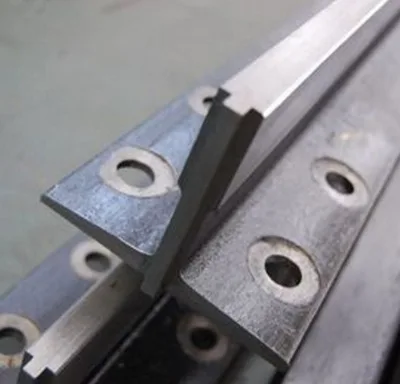
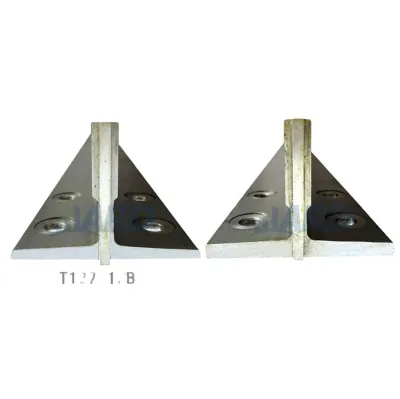
Buyers must first distinguish between cold drawn and machined guide rail variants, as the supplied data indicates distinct manufacturing processes and model ranges for each. The cold drawn process typically yields rails like the T45/a and T50/a models, which are often hollow and designed for specific load capacities up to 1000kg. In contrast, machined rails such as the T70-1/B series offer different surface finishes and dimensional tolerances suitable for high-speed applications. Understanding this fundamental material difference is critical before initiating any procurement request, as the wrong type can compromise the elevator's safety system integrity.
Procurement teams should also verify the specific application context, noting that these components are explicitly listed for public traffic elevators and building shaft installations. The observed product attributes confirm suitability for hydraulic and rack-and-pinion driven systems, with running modes ranging from moving to telescoping lifts. Since the raw material is specified as Q235 steel, buyers must ensure the selected rail profile matches the intended lift mechanism and speed requirements, which are observed in the 1.00-2.00m/s range for six-person capacity units.
Product Scope and Observed Listing Signals
The market listing signals reveal a diverse inventory ranging from standard cold drawn rails to complex machined profiles like the T114 and T140 series. Buyers will encounter products described as elevator spare parts or accessories, often including fishplates, clips, and brackets essential for a complete installation. The observed length specifications vary from 1 to 5 meters, allowing for customization to fit specific shaft dimensions, while the packing methods range from export-applicable trays to standard export packages. This variety requires careful filtering to isolate the exact rail geometry needed for the project.
Commercial signals indicate that suppliers offer OEM capabilities for major brands such as Marazzi, Monteferro, and Savra, suggesting a mature supply chain for replacement parts. However, the price range observed spans from 0.01 to 9999 USD, which reflects the wide variance in unit sizes, material grades, and order quantities. Buyers must scrutinize the minimum order quantity, which ranges from 1 to 100 units, to ensure their procurement volume aligns with supplier constraints. The presence of specific model numbers like NV50 and NOVA further necessitates precise matching against existing elevator schematics.
Technical Specifications to Verify
Verification of the rail profile is the primary technical hurdle, as the data lists multiple distinct types including T Guide, hollow, and machined variants. Buyers must confirm whether the project requires the T45-T127 cold drawn models or the T70-T140 machined series, as these are not interchangeable without engineering review. The size specifications mention thicknesses of 5mm, 9mm, 10mm, and 16mm, which directly impact the structural rigidity and wear resistance of the guide system. Selecting the incorrect thickness can lead to excessive vibration or premature wear in the elevator car.
Load capacity and speed compatibility are equally critical verification points, with observed data citing a 1000kg capacity and speeds between 1.00 and 2.00m/s. The drive mode is listed as hydraulic or rack-and-pinion, and the lift mechanism may be telescoping, all of which dictate the required rail stiffness. Buyers should request detailed dimensional drawings to ensure the rail fits the existing guide rail brackets and clips. Additionally, the raw material grade of Q235 must be confirmed on the mill test certificate to guarantee the steel meets the necessary tensile strength for the specific elevator class.
Compliance and Safety Documentation
Safety compliance is non-negotiable for elevator guide rails, and the supplied facts reference ISO7465 as a relevant standard for these components. Buyers must demand that the supplier provides documentation proving the product meets this specific standard, as it governs the dimensional accuracy and mechanical properties of elevator guide rails. While other standards like EN 81-20 are mentioned in background knowledge, the primary focus for the rail itself should be on the ISO7465 certification to ensure the component is legally and safely deployable in public traffic elevators.
Quality assurance documentation should also include ISO 9001:CE certification, which indicates the manufacturer operates under a recognized quality management system. This certification is a strong indicator that the production process, from cold drawing to final packaging, adheres to consistent quality protocols. Buyers should verify that the certification is current and covers the specific manufacturing site in Zhangjiagang, China. Without these documents, the risk of non-compliance with local safety regulations increases significantly, potentially leading to project delays or legal liabilities.
Cost Drivers and Commercial Terms
Cost structures for elevator guide rails are heavily influenced by the manufacturing process, with cold drawn and machined variants carrying different price points due to labor and equipment intensity. The observed price range suggests that smaller, custom-cut lengths or specialized machined profiles command higher unit costs compared to standard cold drawn stock. Buyers should anticipate that the final price will depend on the specific model, such as the T70 or T140, and the total volume ordered, as the minimum order quantity can range from single units to batches of 100.
Commercial terms must be clearly defined, with the observed data indicating a delivery time of 30 days and shipping via sea freight. The payment term is listed as FOB Zhangjiagang, meaning the buyer assumes responsibility for freight and insurance once the goods leave the port. This incoterm requires the buyer to have a reliable logistics partner to handle the transit from China to the final destination. Buyers should also account for the standard export packaging, which protects the rails during transit but may require additional handling at the destination port.
Supplier Qualification and Quality Control
Supplier qualification should prioritize manufacturers with a proven track record in producing cold drawn and machined guide rails for the elevator industry. The presence of OEM partnerships with brands like Savra and Monteferro suggests that some suppliers have the technical capability to meet high industry standards. Buyers should verify the supplier's production capacity to ensure they can meet the 30-day delivery window without compromising quality, especially when dealing with custom lengths or specific model requirements like the NV50.
Quality control processes must be transparent, with a focus on the cold drawing and machining steps that define the rail's final geometry. Buyers should request evidence of in-process inspections to ensure the T Guide profile and surface finish meet the specified tolerances. The use of Q235 raw material must be verified through material certificates, and the final product should be inspected for defects before being packed in export-applicable trays. A robust quality control system is essential to prevent the installation of rails that could fail under the dynamic loads of a moving elevator.
Long-Term Procurement Checks
Long-term procurement success depends on establishing a reliable supply chain for spare parts, as elevator guide rails are subject to wear and eventual replacement. Buyers should secure agreements with suppliers who can consistently provide the same model numbers, such as the T45 or T114, to ensure compatibility with existing elevator systems over decades of operation. The availability of accessories like rail clips and brackets should also be confirmed to facilitate future maintenance without needing to source disparate components from different vendors.
Performance monitoring is another critical long-term check, requiring buyers to track the condition of installed rails against the observed specifications for load capacity and speed. Regular inspections should verify that the cold drawn or machined rails maintain their structural integrity under the 1000kg load and 2.00m/s speed conditions. Buyers should maintain a record of the supplier's delivery times and packaging quality to ensure that future orders arrive in the same standard export package, minimizing the risk of damage during transit and ensuring a seamless replacement process.
FAQs
What is the load capacity for these elevator guide rails?
The load capacity is 1000kg for the specified elevator guide rail models. This rating supports standard public traffic applications and ensures safe operation within the designated weight limits. Buyers should verify specific model requirements against their elevator system design to ensure compatibility and safety compliance during installation.
Which certifications apply to the cold drawn guide rail products?
The products hold ISO 9001 and CE certifications, indicating compliance with international quality and safety standards. These credentials assure buyers of consistent manufacturing processes and material integrity. The guide rails also adhere to ISO7465 standards, providing reliable performance for elevator systems requiring certified components for global deployment and regulatory approval.
Can the guide rails be customized for specific elevator models?
Yes, customization is available for various elevator guide rail specifications. Buyers can request specific models such as T45, T70, or T140 variants to match their existing infrastructure. This flexibility allows for precise integration into different elevator shafts, ensuring optimal fit and performance without requiring extensive modifications to the current elevator system design.
What is the typical delivery time for these elevator parts?
The standard delivery time is 30 days for order fulfillment. This timeline applies to most standard configurations and allows for proper manufacturing and quality checks. Buyers should account for this lead time when planning installation schedules, ensuring that the guide rails arrive well before the required installation window to avoid project delays.
How are the elevator guide rails packed for export?
The guide rails are packed in export-applicable trays or standard export packages. This method protects the cold-drawn steel surfaces from damage during transit and handling. The packaging ensures that the rails arrive in pristine condition, ready for immediate installation, while also facilitating efficient loading and unloading at the destination port or warehouse facility.
What raw material is used for the T-guide rails?
The raw material used is Q235 steel, known for its strength and durability. This material is processed through cold drawing to achieve precise dimensions and smooth surfaces. The use of Q235 ensures that the guide rails can withstand the mechanical stresses of elevator operation, providing long-term reliability and minimal maintenance requirements for the elevator system.